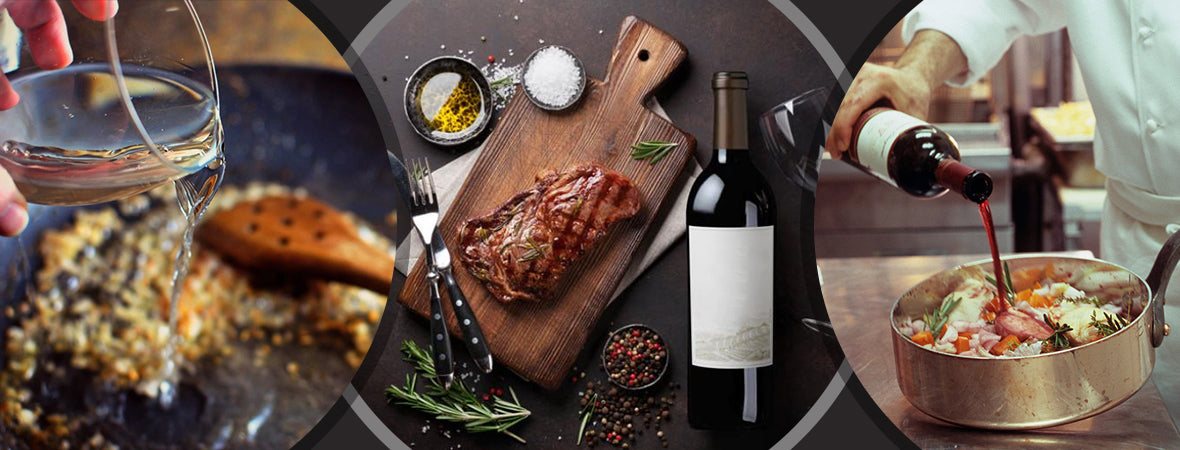
Quick answer: Use a dry, inexpensive wine that you'd be happy to drink. For white-wine recipes, a crisp Sauvignon Blanc, Pinot Grigio or unoaked Chardonnay. For red-wine recipes, a fruity, medium-bodied Merlot, Pinot Noir or Côtes du Rhône. Skip supermarket "cooking wine," which has added salt, and save expensive bottles for the glass.
Best white wines for cooking
| Wine | Use it for |
|---|---|
| Sauvignon Blanc | Seafood, shrimp scampi, mussels, lemony chicken, deglazing |
| Pinot Grigio | Light pan sauces, risotto, steamed clams |
| Unoaked Chardonnay | Cream sauces, chicken, risotto |
| Dry vermouth | A long-lasting stand-in for white wine in any recipe |
Avoid heavily oaked whites, which can turn bitter when reduced, and sweet wines unless the recipe calls for them. See our white wine.
Best red wines for cooking
| Wine | Use it for |
|---|---|
| Merlot | Pasta sauce, pan sauces, braised chicken |
| Pinot Noir | Coq au vin, mushroom dishes, salmon |
| Côtes du Rhône or Grenache | Beef stew, braised short ribs, lamb |
| Chianti (Sangiovese) | Tomato sauces, Bolognese, meatballs |
| Cabernet Sauvignon | Red-wine reductions for steak, beef bourguignon |
Very tannic, oaky reds can taste harsh once reduced, so a fruity, medium-bodied red is the safer choice. Browse our red wine.
Fortified wines in the kitchen
Some classics call for fortified wine: Marsala for chicken or veal Marsala, dry Sherry for soups and stir-fries, and Port for reductions with steak or duck. Because they're stronger and keep for weeks after opening, a bottle lasts through many recipes. See our Port and Sherry.
Why not use "cooking wine"?
Supermarket cooking wine has added salt and preservatives so it can sit on a shelf. The salt throws off your seasoning and the flavor is flat. A real bottle of wine costs about the same and tastes far better.
Does the alcohol cook off?
Not all of it. How much remains depends on how long the dish cooks. U.S. Department of Agriculture figures for wine stirred into a dish and simmered or baked:
| Cooking time | Alcohol left (about) |
|---|---|
| 15 minutes | 40% |
| 30 minutes | 35% |
| 1 hour | 25% |
| 2 hours | 10% |
| 2.5 hours | 5% |
If you're cooking for someone who avoids alcohol, use broth with a splash of vinegar or lemon juice instead.
Tips for cooking with wine
- Add it early in sauces and braises so the raw alcohol taste mellows.
- Reduce it: simmer until it's cut by about half before adding cream or stock.
- Deglaze: pour wine into a hot pan after searing meat and scrape up the browned bits.
- Keep leftovers: recork opened wine and refrigerate; it's fine for cooking for about a week.
FAQ
What is the best white wine for cooking?
A dry, crisp white such as Sauvignon Blanc or Pinot Grigio.
What is the best red wine for cooking?
A medium-bodied, fruity red such as Merlot, Pinot Noir or Côtes du Rhône.
Is Cabernet Sauvignon good for cooking?
Yes, in hearty beef dishes and steak sauces. Choose one that isn't heavily oaked.
Can I use an expensive wine for cooking?
You can, but cooking changes subtle flavors. An everyday bottle works just as well; drink the good one with dinner.
Shopping for a recipe? Pick up at 55 Flatbush Ave in Downtown Brooklyn or get same-day delivery in Brooklyn, Manhattan & Queens.
Keep reading: Thanksgiving wine pairing · Red wine food pairing · White wine pairings